I Went to the Buena Vista Social Club: Here’s What I Thought
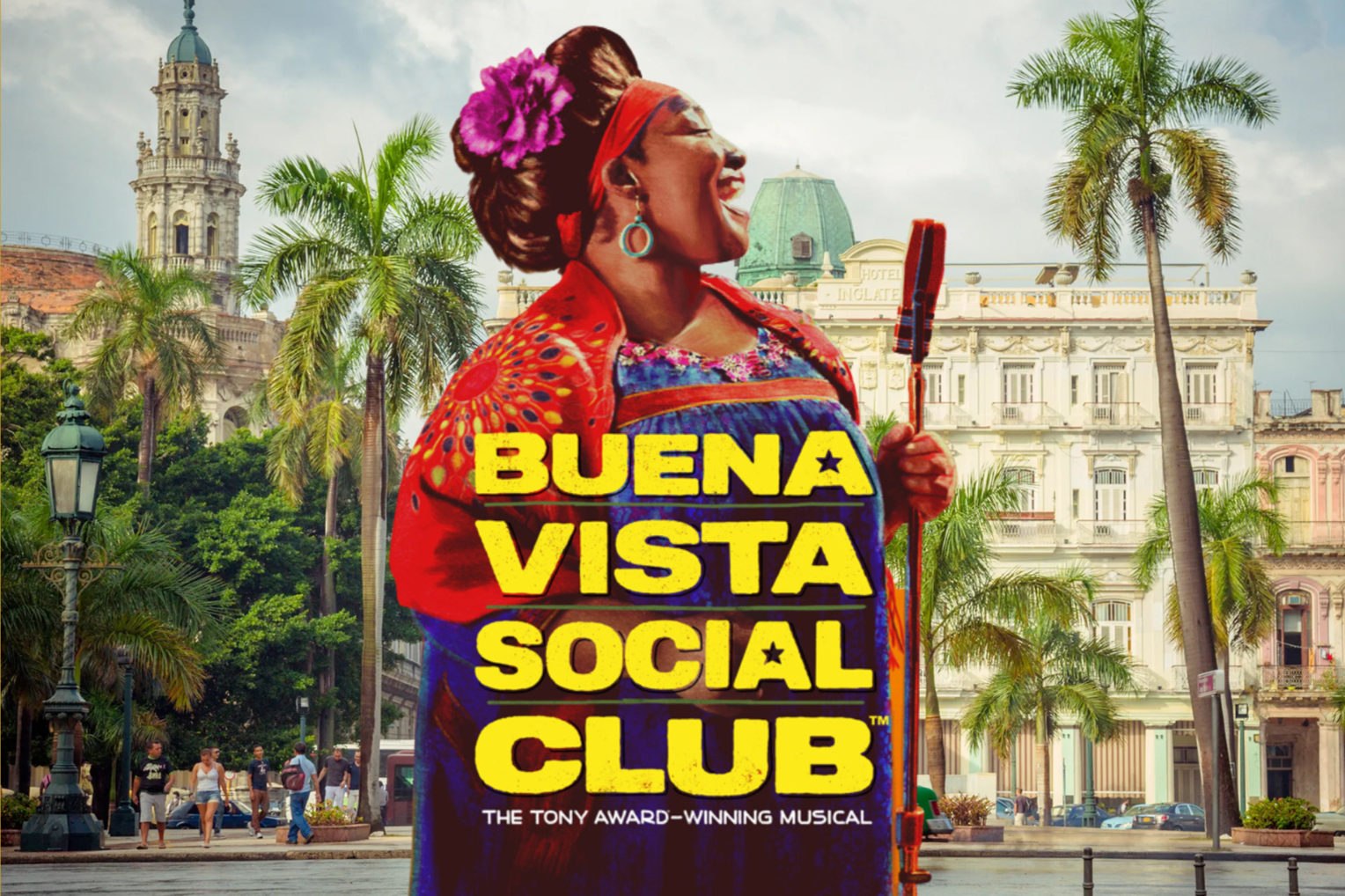
Buena Vista Social Club takes the stage on the Broadway Stage with a backdrop of Havana, Cuba
On a rainy Wednesday afternoon during my President’s Day Break, I had the opportunity to view the Tony Award-Winning Musical, Buena Vista Social Club. I was skeptical at first, not knowing much about the musical other than the description my mom provided: Cuba and music. By the end of the immersion, I was equally educated and moved by the beautifully crafted landscape of music and Cuba in its pre-communist state. A performance depicting real events with vibrance, sentiment, colors, music, and a history lesson, the show is a must-watch, and most certainly a celebration of music you just can’t miss.
The story is sequenced and defined by flashbacks from the present to the past and revolves around the inspired by ‘real events’ story of the Cuban singer Omara Portuondo. Two storylines occur simultaneously and end in different places but logically come together to provide clarity.
The Omara from a distant past, works through the regime change in Cuba, dealing with a tension between opportunity requiring a movement to New York City, and her love for Cuba, creating a desire to stay. The present-day Omara (by now around the late 90s to early 2000s, so not present to us but present within the story), already a well-established musician within Cuba, is asked by a young and optimistic producer to come out of retirement to sing one last album, which is later known as the Buena Vista Social Club. However, despite the producer’s many requests, Omara would not budge; she would never sing again.
Later, her sister’s death is described as Omara’s rationale for retirement. However, in real life, the semi-retirement period occurred before 1996, and was more so influenced by the singer’s rising age, but did not end in an imminent abandonment of singing altogether, like the musical explains. Still, the message engraved in the musical was clear: Omara was hesitant to return to the spotlight her music career had provided. What she didn’t know in both real life and in the musical, though, is that the new album would be different: it would give her her first taste of large-scale international recognition and eventually lead to the winning of her first-ever Grammy Award.
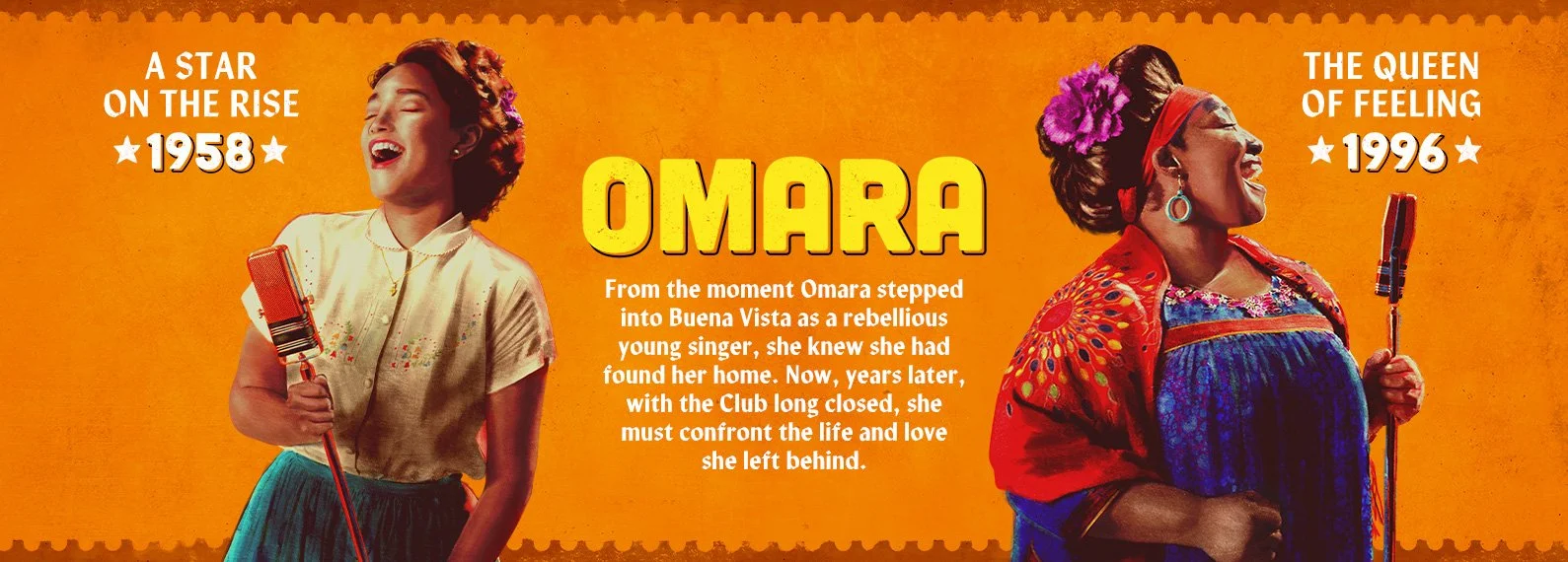
Young and Old Omara with Character Description: Buena Vista Social Club Musical
Let’s start back in 1958; just a year before Fidel Castro’s Cuban Revolution. Omara is young and a rising artist alongside her older sister, Haydée Portundo, in a sister-duo group. They rehearse for their next big event: the New Year’s party at the tourist attraction hotel. It’s the event that could give them a record deal with Capitol Records and tickets out of Cuba just in time before Cuba becomes isolated. Despite so much to be seemingly happy about, Omara’s hesitance at success was never invisible. Her sister disapproves of Omara’s love for the songs their mother used to sing. The songs talked about oppression and slavery, nothing fit for the tourists and international music world that want to escape the world’s problems through music, not enter them.
However, that night, Omara discovers a new location to make music that isn’t for the tourists: the Buena Vista Social Club. A restaurant with frequent live music, Omara feels that she is allowed to experience joy and passion within her musical endeavors for maybe the first time in her life. Eventually, this passion turns into turmoil. The Capitol Records deal be that the sisters would later receive? Omara could not accept it, deciding to stay in Cuba, even with the increasing riots. She couldn’t do it; to perform music that felt inauthentic and manufactured. She stayed in Cuba. Haydée leaves for New York City. Omara stayed with the Vista Club.
Though, as it turns out, A&R management was waiting for the singer whose heart belonged to Cuba. They found her. A girl who could not leave for a new world that didn’t include her favorite city, Havana, or her feelings of homeliness. And even more merrily, the label not only approves of Omara’s favorite style of music but also encourages Omara to explore her favorite styles. Only one condition was given to Omara: to part with the Buena Vista Social Club.
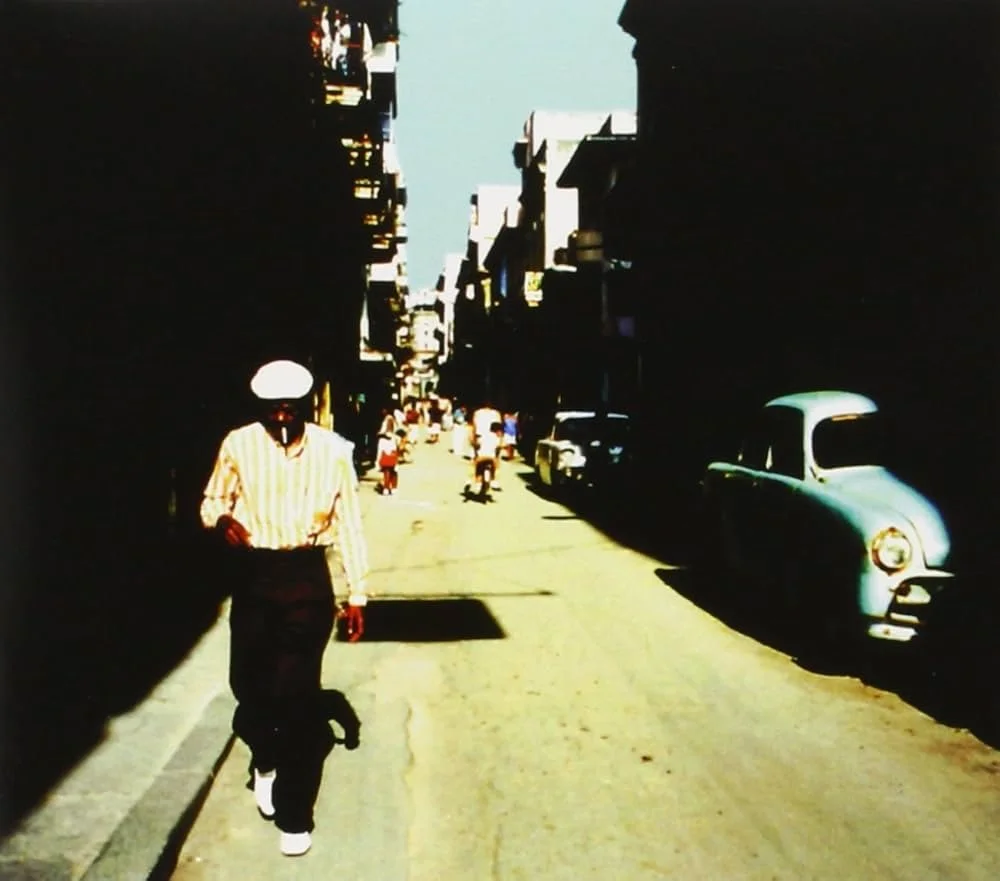
Album Cover for Buena Vista Social Club, 1997
While the increasing revolution was predicted to shut down the club anyway, Omara made the ultimately tough decision to part with the Club and its new form of music that was even more joyful than the ones she could finally sing. What unravels by the end of the storyline is the understanding that the modern-day new song is the ultimate celebration of the Buena Vista Club’s reunion, documented as the album. From pianists, vocalists, to drummers, everyone is the same, playing music that was sung and made together ‘all those years ago’.
That Wednesday, I left the Broadway theatre with a hope for humanity. With not a single moment for my ears to feel bored of a lack of emotive and joyful live music (yes, the musicians are displayed directly on the stage throughout the show, and heck, there’s even an improv flute solo that takes up the whole audiences breathes), the show left me with pride for Omara’s love for Cuba, pride for the value she puts inside her music, and pride for music as a genuine emotion. Through painstaking moments and danceable ensemble performances, I’ve learned the power of music, and I was a big fan of the musical.