The Comeback of the Movie Musical
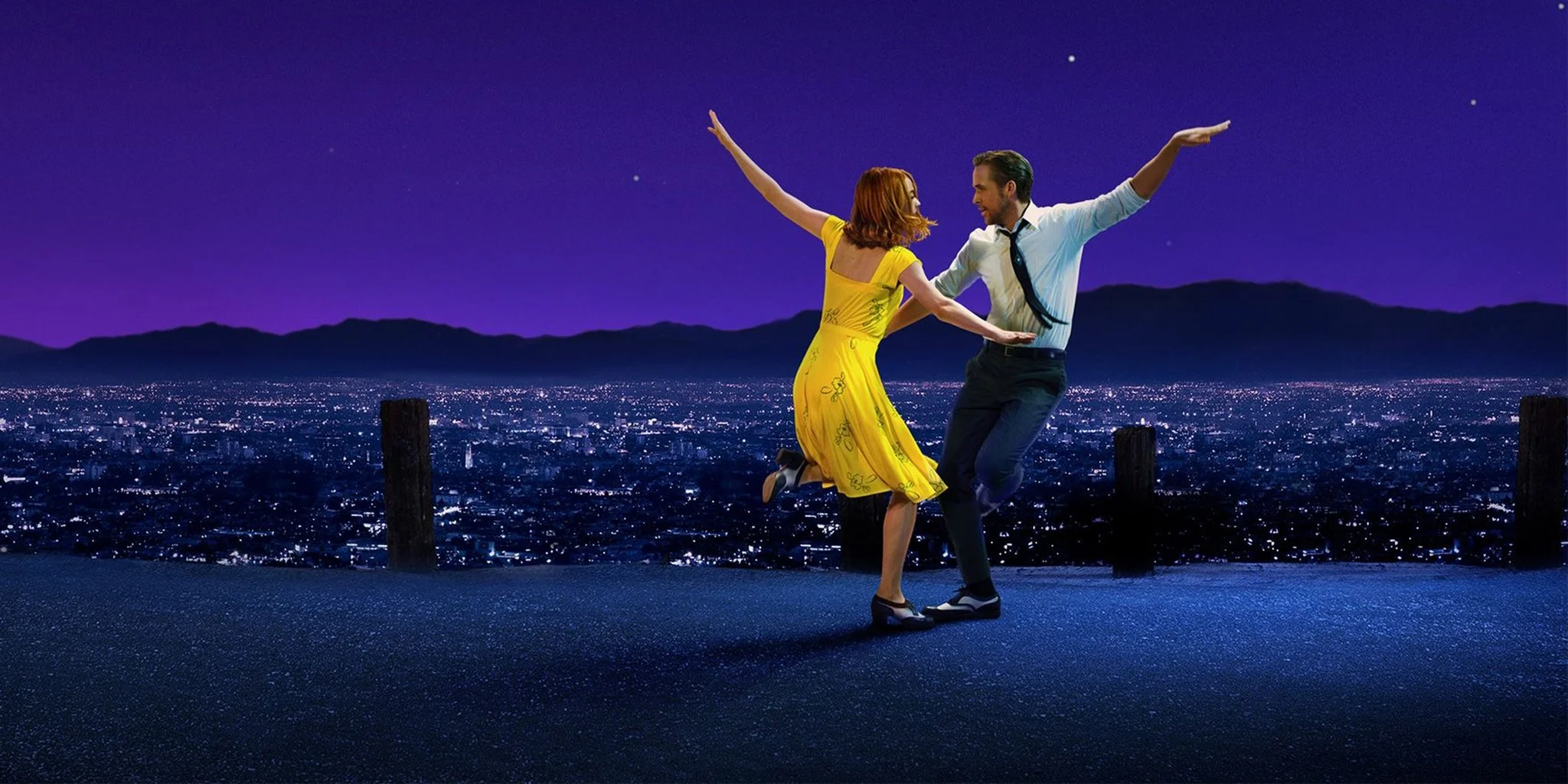
“La La Land” (2016): Courtesy of Summit Entertainement
When thinking about musical classics such as “Singin’ in the Rain” and “The Sound of Music,” we’re taken back to another Hollywood era of larger-than-life choreography, vibrant Technicolor, and a commitment to creating spectacular movie musicals. Looking back at the Golden Age of Hollywood, such musical choices seem outdated. Show tunes are now a relic of the past; the current box office of commercial cinema rewards action films, high budgets, superheroes, and product placement. Even so, TikTok edits, the rise in cinema culture, social media fanaticism, and the rising virality of films like “Mean Girls” and the “Wicked” franchise shifted the old age of movie musicals into something beautiful: their comeback.
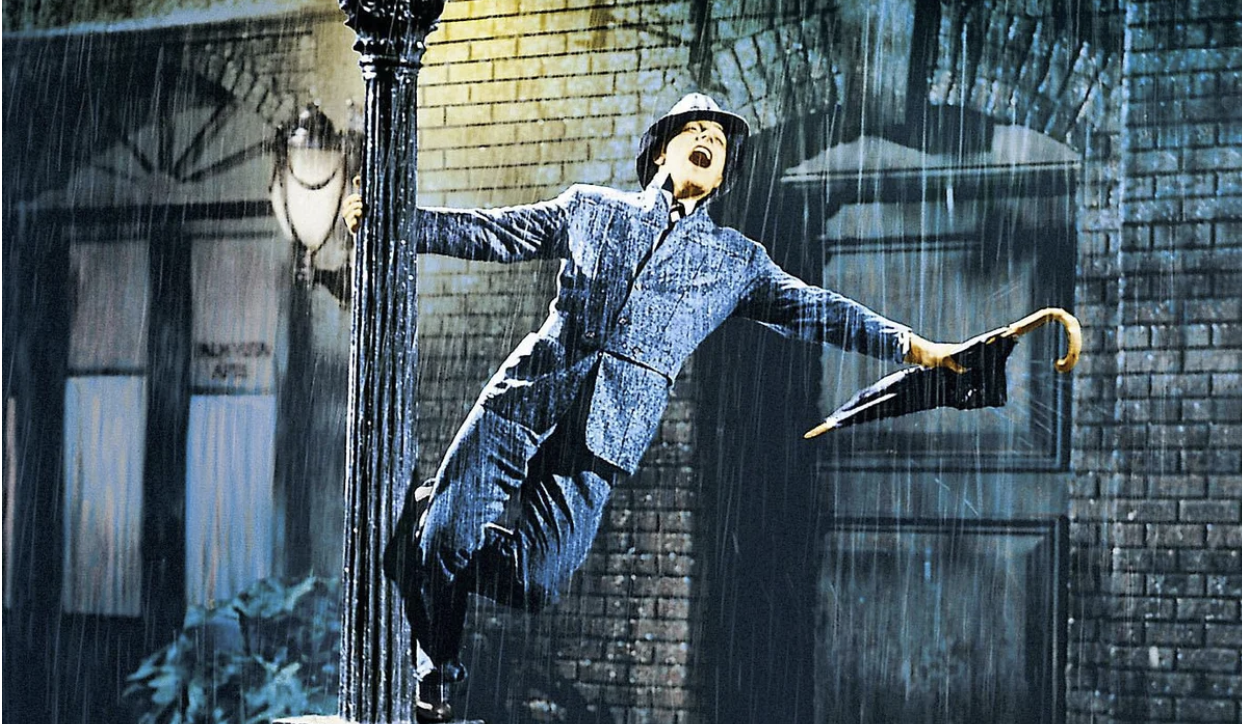
“Singin’ In The Rain” (1957): Courtesy of Metro-Goldwyn-Mayer (MGM)
Surprisingly, this new wave of movie musicals is currently catering to an entirely new audience than the prior. It is deeply tied to stan culture, film nerds, and emotional youth. Today’s movie musicals are not only created for a fun time at the cinema, but they are made to exist beyond the screen. Trends, memes, clips, and online discourse are a few of the many platforms allowing for musical songs to trend on streaming platforms, such as Spotify or Apple Music, and flood social media feeds for months following premieres.
When films are released, the added visibility sends streams of both the movie soundtrack and the original stage recordings skyrocketing. For example, original Broadway cast recordings for Mean Girls saw streaming increases of 220% to 250% immediately following the film's release. Highly anticipated projects frequently shatter long-standing records; the film adaptation of Wicked set a new high for a movie musical soundtrack with over 77.5 million streams in the movie’s debut, surpassing the six-year record previously held by A Star is Born.
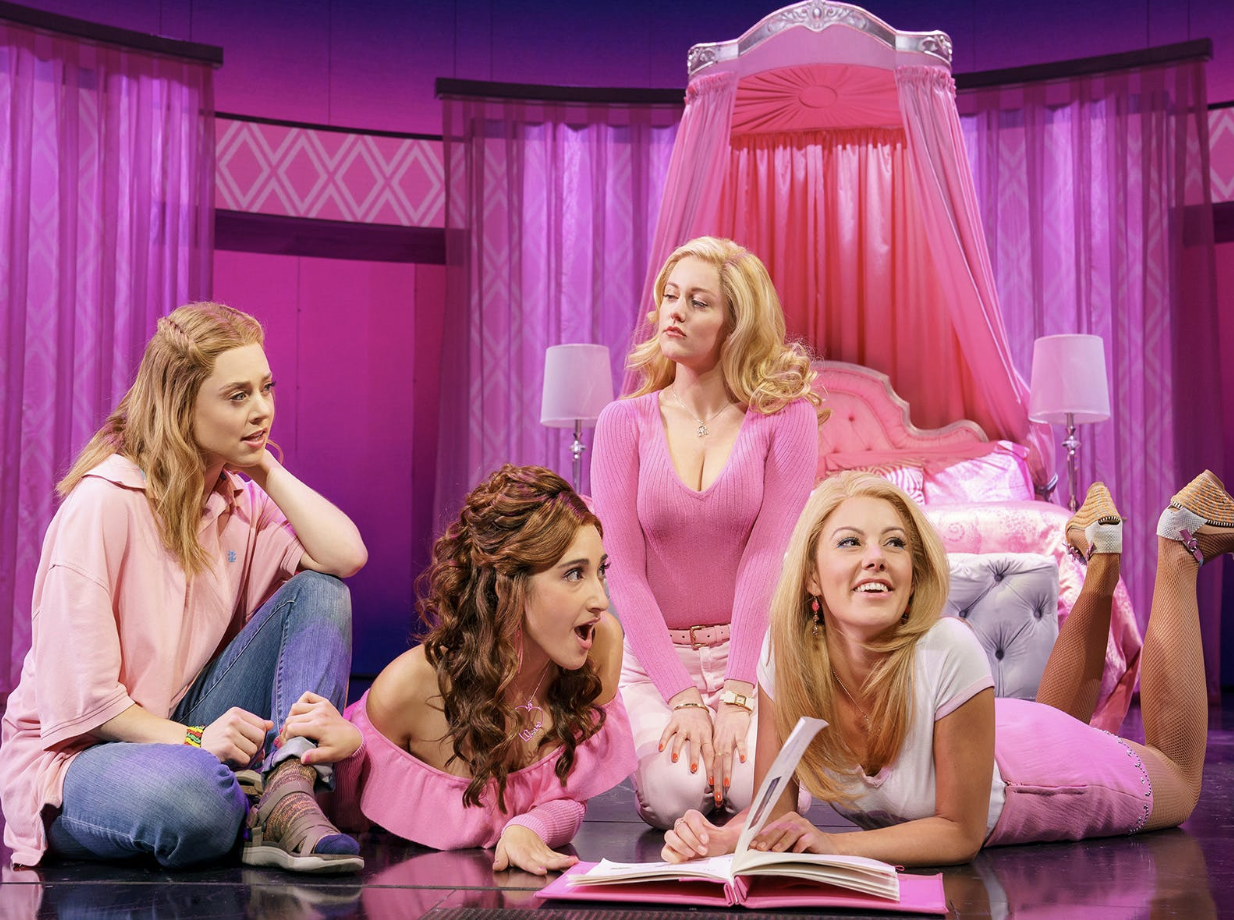
“Mean Girls” on Broadway: Courtesy of the New York Theatre Guild
Though both new “Wicked” films, along with the “Mean Girls” musical adaptation, are recent examples of the comeback of movie musicals, I’m personally a firm believer that the cause of this trend dates back to the massive success of “La La Land.” Damien Chazelle is a filmmaker who explores themes of music throughout his films. For example, in “Whiplash,” he was able to connect with both film-fanatics and hopeless romantics around the world. His emotional yet balanced movie musical balanced spontaneous singing, choreography, and a throwback to Hollywood-era spectacularity, which was embraced by its audience for its relevant modern-day themes of ambition.
Then came “The Greatest Showman,” a film that was able to establish itself as a cultural phenomenon almost entirely through word of mouth and the online popularity of the soundtrack. The movie’s reviews, bipolar as they were, hardly mattered when songs like “This is Me” took over online platforms. What makes this “modern golden age” of movie musicals particularly fascinating is how musicals are kept alive through stan and fandom culture. A generation based around music platforms such as Musical.ly and TikTok is sure to remix, quote, parody, and build communities around the cultural references they view as important.
Musical films, in particular, tend to be highlighted with this form of online engagement because emotional and climactic moments are highlighted through performance. Dramatic songs can be turned into trends, and dramatic monologues into memes, such as the TikTok-ification of “Hamilton” in its entirety. “Wicked’s” on-screen production arrived with years of anticipation, dominating online spaces with the help of the massive fanbases of Cynthia Erivo and Ariana Grande, who play the lead characters in the musical. Instead of being popular amongst thespians and theatre kids, Wicked was appreciated by all kinds of audiences, treated on the same scale as a superhero blockbuster.
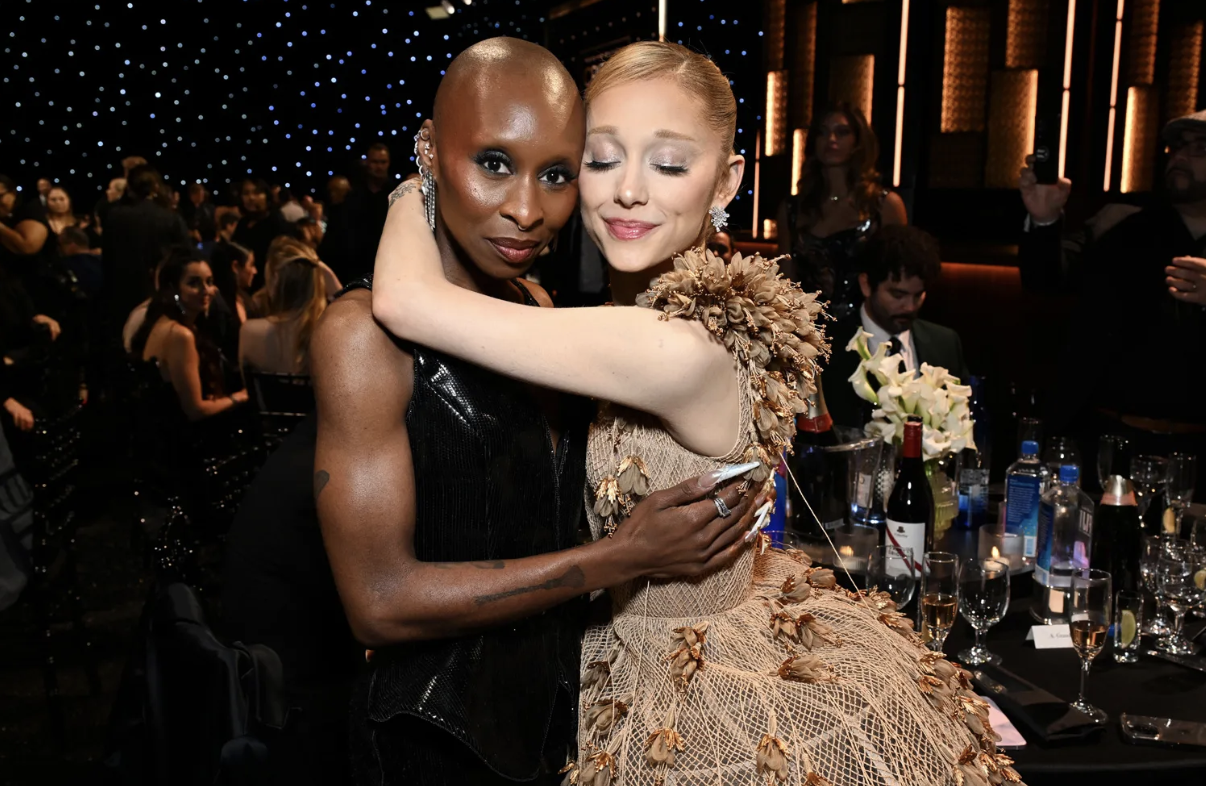
Ariana Grande and Cynthia Erivo for “Wicked” franchise, Credit: Billboard
Stylistically, there are many films that have grown out of the typical mold: “Tick, Tick… Boom!,” a film that blends autobiographical drama with theatre, “Encanto,” an animated film about latin heritage and family powered by Lin-Manuel Miranda’s viral songs, and an everlasting list… Even more unconventional projects from “Joker: Folie à Deux” to experimental indie musicals all show that Hollywood, as capitalistic and mainstream as it may seem, is willing to treat the movie musical with respectable adaptability.
There’s also a broader cultural reason why musicals may be resonating with the public again, and that is that audiences are exhausted by the repetition of realism. La La Land, much like other movie musicals, allows characters to feel things at an unapologetic intensity. Musicals offer a refreshing sincerity in a world of franchising, drama, and commercial cinema. To younger audiences, this is a sincerity that resonates.
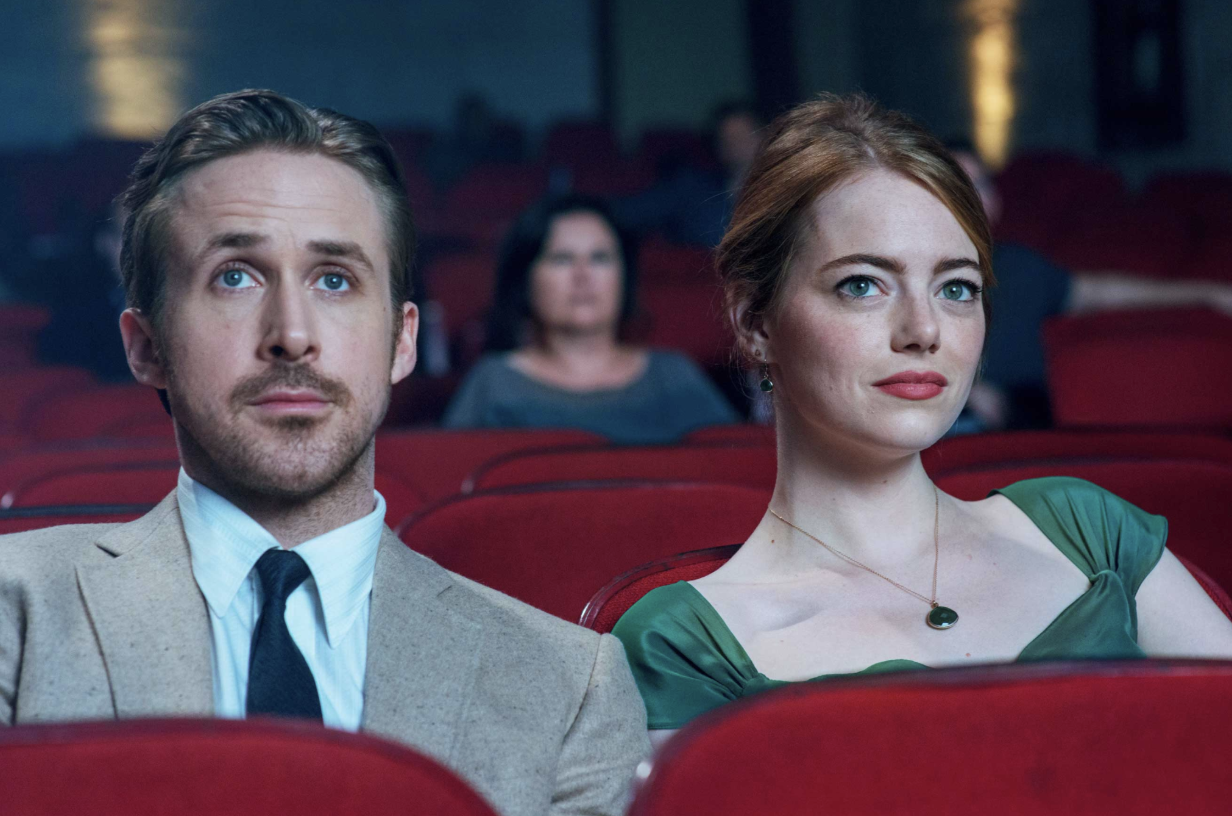
“La La Land” (2016): Courtesy of Summit Entertainement
Gen Z pop culture often balances cynicism with a craving for authenticity, and musicals are the perfect Goldilocks of said tension. Musical numbers allow characters to express heartfelt emotions too overwhelming to be expressed as monologues, which, to me, is cathartic in an age where our emotions are articulated through filtered online personas and social presences.
Of course, not all musicals will succeed and perfectly express all the right emotions. Large-scale adaptations like “Cats” became infamous for uncanny valley effects when the use of CGI to create lifelike cat bodies was combined with a film that received criticism for its pacing and songs, and the film itself received significant criticism for its execution—a clear indication that the genre still carries outliers. The musical scene is frankly demanding art forms that crave delicate balancing of realism and theatricality, which is easily perceived as wrong by audiences when the tone feels off. Even these failures, such as “Cats,” contributed to the rise of the movie musical in the new internet age.
What’s happening now is a reinvention of the golden age of movie musicals. They resonate with contemporary pop culture through its cringiness, relatability, emotionality, fandom-driven nature, It is different from recreating Broadway onscreen and allows for creating connections between the music, the audience, and media that can be replayed, reposted, and sung along with.
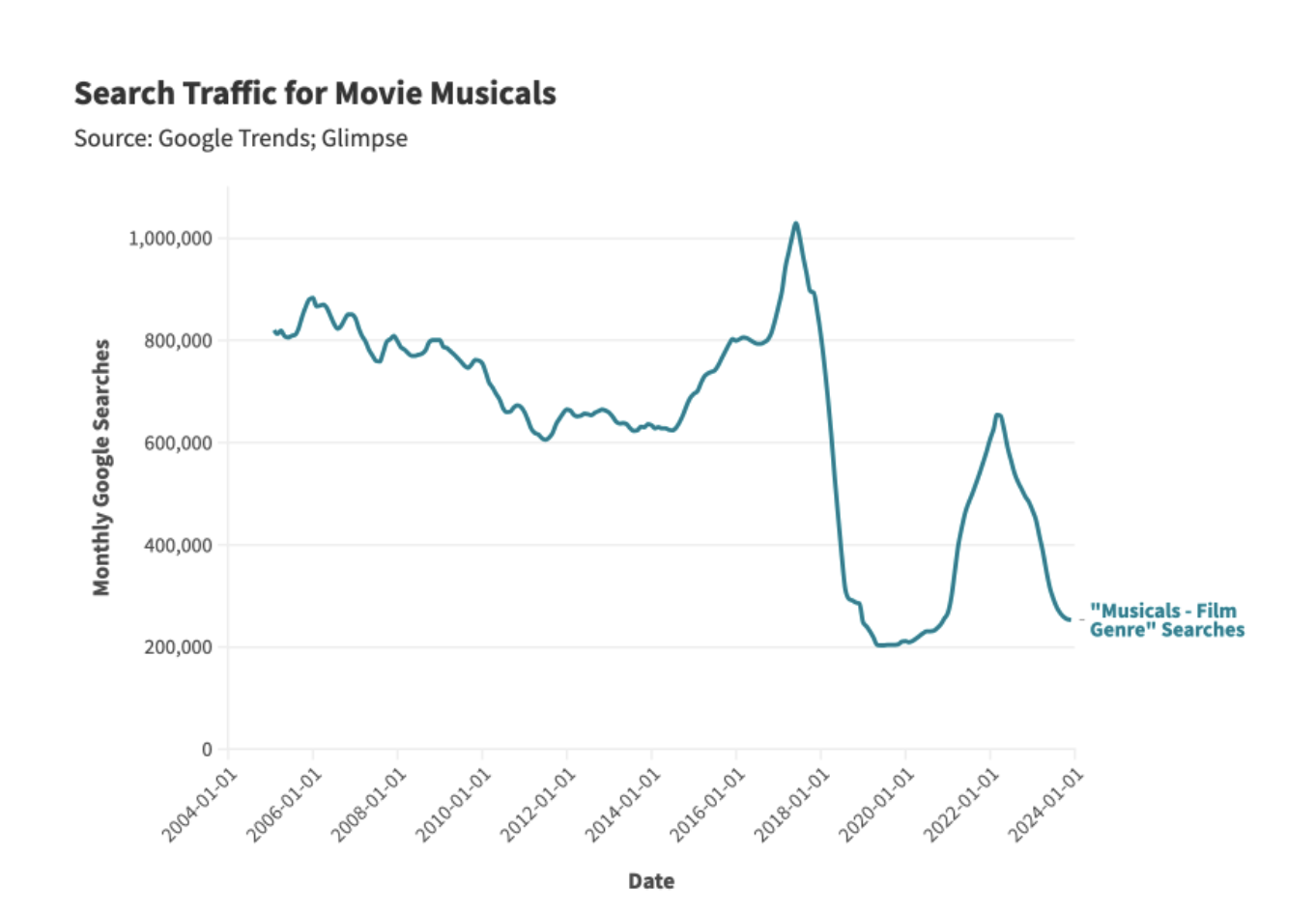
Graph showing the increase search popularity of movie musicals, Credit: Broadway World
Throughout my upbringing, I have watched Hollywood treat movie musicals as relics of a bygone era, appealing primarily to those obsessed with nostalgia. Now, however, the genre has transitioned into an unexpected contemporary era. The modern musical feeds fandom culture, virality, and emotional immediacy better than almost any genre. Despite the exhaustion Gen Z feels from cringe and cancel culture, musicals create moments that allow audiences to replay, repost, and mutually obsess over.
Musicals ask audiences to suspend disbelief in exchange for emotional catharsis, just like “La La Land.”The movie musical is returning because it reflects contemporary popular culture perfectly, through its excessive, emotional, hyper-visible, and desperate nature. Our generation is desperate to feel something genuine, and movie musicals allow us to do just this amid the noise and spectacle.