How Its Soundtrack Defined “Call Me By Your Name”
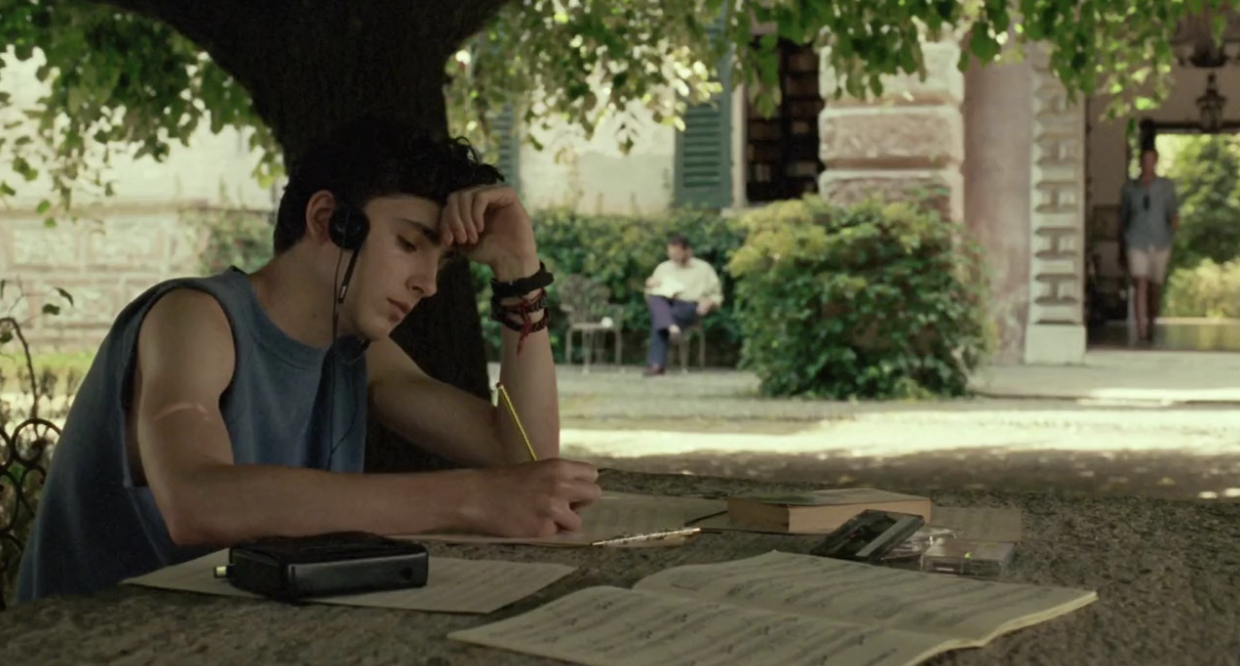
Timothée Chalamet as Elio Perlman in Call Me By Your Name (2017)
Sometimes, a story so captivatingly gorgeous relies on a film feature to work overtime, beckoning its viewers to fall in love. Call Me By Your Name is a passionate love story of Elio Perlman and a 24-year-old graduate student interning with Elio’s father for the Summer of 1983 somewhere in Northern Italy. His life, surrounded by eccentric intellectuals, polyglots, archaeologists, and composers, is captured through the eyes of director Luca Guadagnino. Watching this film realizes the feeling of the entire ecosystem of characters beckoning to a person, with a setting so enticing it almost creates a new emotion.
This story of young love and self-discovery, the so-called “Bildungsroman,” however, only exists in its captivating nature with the indefatigable soundtrack curation of Mr. Guadagnino. With sentimental folk songs written by Sufjan Stevens, two original tracks made for the film, “Mystery of Love” and “Visions of Gideon,” and a rerecorded version of “Futile Devices,” dominating the discourse of pop culture references of the film, Guadagnino blends these new tracks with 80s European pop, such as “Love My Way” by the Psychaelic Furs, and classical piano pieces, such as Maurice Ravel’s "Une barque sur l'océan".
The heterogeneous blend of genres functions as an active narrative character to the conscience of Elio, representing everything from the unspoken thoughts and shifting tension between Elio and Oliver to the more literal atmosphere of 1983 northern Italy. Music acts as both a worldly placemaker and a deeply figurative embodiment of tenderness and the emotional shifts of Elio’s relationship with himself and the world around him. With this, although the main audience of the film is Generation Z, viewers feel an emotional similarity to the youth of the 80s: a way to moodboard one’s life and newfound feelings with the help of music.
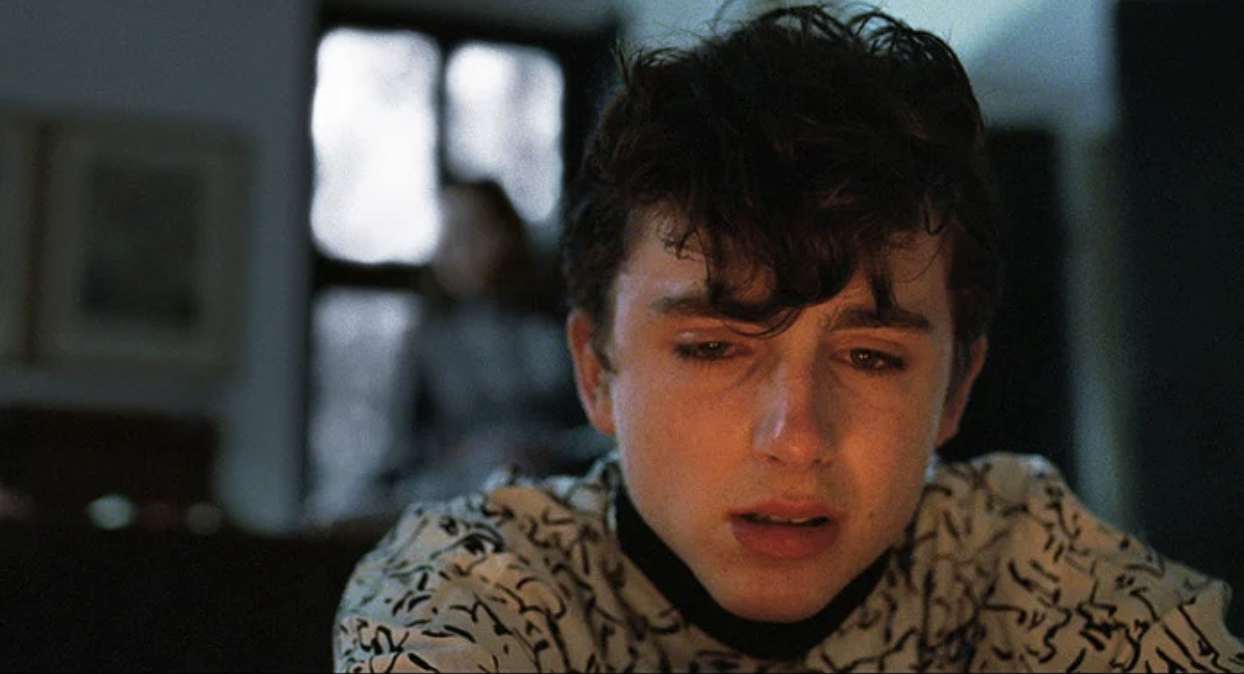
Timothée Chalamet as Elio Perlman in Call Me By Your Name (2017)
Through allowing a contemporary viewer to inhabit an emotional summer decades before the present in an unfamiliar setting, the soundtrack becomes a time machine. This Venn diagram of a relationship between music and emotion is most significantly exemplified with Sufjan Stevens’ original “Mystery of Love.” Appearing in a montage towards the end of the film, during the final moments together before Oliver’s return to the United States, its placement represents the emotional peak of the relationship between Elio and Oliver. Dialogue ceases in importance, allowing the delicate vocals and instrumentation of Stevens’ music to reflect on the fragility of their relationship, much like the significance of Elio’s fondness for transcribing music. Here, music and lyrics interpret the scene, despite its non-diegetic nature.
Elio as a character is deeply musical, so Guadagnino’s emphasis on the importance of music is not merely coincidental. He plays the piano, transcribes music, and experiments with classical compositions throughout the story. Music, a figure of his identity, emerges from his internal world, reflecting his yearning to be both desired and understood. The versatility of the chosen music, whether it be classical music to represent Elio’s classically artistic family environment, or contemporary pop songs that reflect on the excitingly awkward halfway point of being young, is a poignant figure of musical interests becoming a way to verbalize emotions.
This is noticeable in the iconic dancing scene involving “Love My Way.” At an open-air discotheque, Elio jealously watches Oliver kiss a local girl named Chiara, attempting to hide his disillusionment. He uses his girlfriend Marzia as an emotional buffer, entering the dance floor to slowly edge closer to Oliver. Despite the energetic and social milieu of the visuals and audio, Elio’s internal experience represents something completely different. The music, instead of being a clear reflection of his mind, creates an unearthing contradiction: though everyone around him is enjoying a carefree night of dancing and letting loose, Elio remains struggling with desire and insecurity. The upbeat sonification of the peak 80s therefore makes isolation all the more apparent.
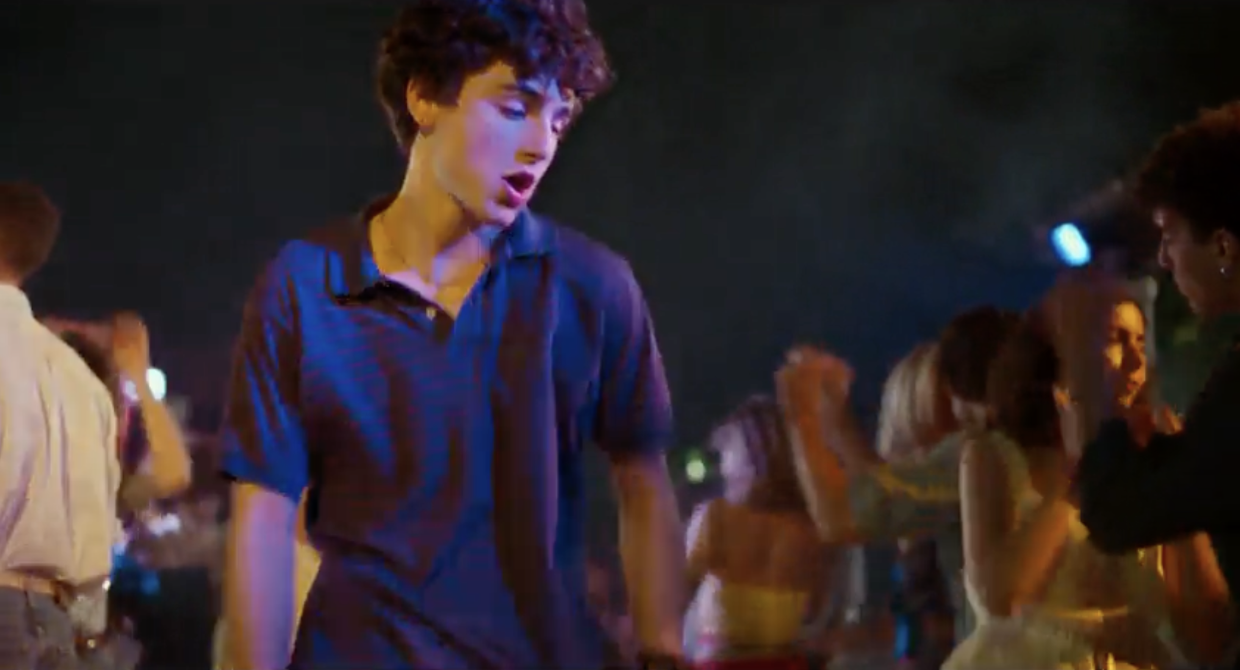
Timothée Chalamet as Elio Perlman in Call Me By Your Name (2017)
To expand to the consumer scale, the online presence of Call Me By Your Name is inherently alive because of the role of the soundtrack. In fact, combined on Spotify, the three Sufjan Stevens tracks featured in the film have accumulated over 1.48 billion streams, a result of edits, commentary, and an overall online buzz associated with these sonic anchors. The iconic edit posted on TikTok in April of 2020 of Elio placed behind Melanie Martinez’s “Play Date” is the paradigm of how generational songs represent the same emotional vulnerability. Developing a life beyond the film itself, someone, without having viewed the film, can listen to a song like “Mystery of Love,” or even “Play Date,” a song not even having been in the soundtrack belonging to a completely different era of music, and still feel an association to the themes of the film because of its cultural relevance and imagery.
The nature of the film’s meaning could therefore fluctuate with any assigned song. For someone alive in 1983, the emotional significance could easily be tied to the Psychedelic Furs, while for a teenager streaming the movie in 2020, it would instead be tied to a relevant TikTok audio snippet. The ways teenagers have reshaped the same theme of the bittersweet nostalgia of first love from Call Me By Your Name to remain relevant to modern themes bridges the gap between generations. Whether it be Ravel, The Psychedelic Furs, Sufjan Stevens, or a circulating TikTok song Gen Z associates with a certain generation, the soundtrack consequently enhances the film’s narrative and cinematography.
Perhaps the most essential feature of Call Me By Your Name is its soundtrack. It does something essential: it resonates with people who did not grow up in the world it depicts. Guadagnino’s film manages to tell a story that is both specific and universal. It is “quintessentially Italian,” as set in 1983 with regional songs like Loredana Bertè’s “J’adore Venise,” but also a universally relevant portrayal of confusion, hope, youth, and loss. The music transports viewers to enter their world emotionally rather than practically, turning the film into something that feels like the distant memory of summer of our own. It is in this way that Call Me By Your Name was not only shaped by its own elements, but by the people who saw it; the people who translate the landscapes, characters, and each unfolding moment into a collection of songs that remain tender as the credits begin to roll