Why You’re Wrong About the Grammys.
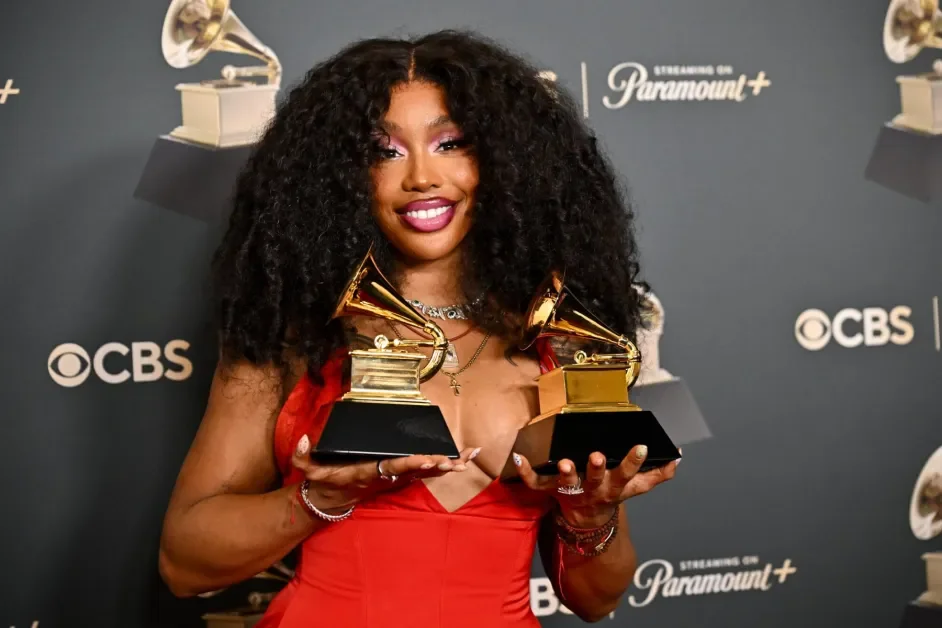
Source: Billboard
Hot Take: One thing I’ve grown into feeling is a little more than just irritating are self-proclaimed music commentators who use their social media platforms to push forth their personal preferences of which artists should have won at the Grammys. Three things are certain in life: taxes, death, and—my newest addition to this phrase—complains about the Grammys. It’s become a routine where I find annual entertainment from both the Grammys and how ridiculous some social media users' complaints become.
Don’t get me wrong, everyone is entitled to their opinions, and sometimes the Grammys do truly fail to crown the artist who truly deserves their flowers. But, what I’m analyzing as oblivious are the commentators who don’t have any will to understand how Grammy nominations and voting procedure works; they get upset that their favorite artist lost, for example, when the award clearly wasn’t meant to praise that artist. If you’re my esteemed reader and this doesn’t make sense yet, fear not—in this article I’ll explain how the Grammys actually work, and how the 15,000 voting recording academy members make their decisions.
Nomination Process
Firstly, the nomination process is gruelingly long, and must be understood. The procedure starts with artists and labels who wish to see their work nominated for a Grammy submitting their work to the academy, and for specific categories, like Artist of the Year. The full process is kept somewhat covert, but from my understanding there are multiple rounds before the typical Top 5 contenders are selected for the nomination. One of these final rounds includes a video call that allows the artist to explain the story behind their creation. Finally, by then, (after about two to three months of evaluating candidates), nominees for the Grammys are publicly announced.
So, what exactly makes a nomination worthwhile for the Grammy recognition, and ultimately an award? Seemingly, the context of the artist and the music they’re pitching is highly considered. By context, I mean the extent to which the Grammys likes that artist alongside the artist’s career path, the music’s success, and Grammy connections.
The Grammy Preference
Culturally termed as a, ‘Grammy Babe’ the Grammys tend to favor specific artists that they’ve had good relationships with in the past, and whose music they continuously seem to praise. Lady Gaga, for example, is a classic ‘Grammy Babe’ continuously being recognized by the academy. But, ‘Grammy Babes’ aren’t just given the honor randomly: they are artists who usually are unique, and offer a level of classic with innovation. Lady Gaga makes sense as a ‘Grammy Babe’ as she often leans into a nightmarish aesthetic and sound, but also allows innovation and separation from her norm with experimental albums like “Joanne”.
More importantly, though, the common norm among ‘Grammy Babes’ is that they all have visible effort and respect to the Grammys and music industry. It’s a little like kissing the ground the academy walks on, and it’s often preferred. What it looks like would be networking with the recording academy voters, constantly promoting your music with publicity, and using interviews as a method to promote your narrative. Of course, this doesn’t mean that awful music is going to get nominated just because of connections; but, it does mean that this hidden criteria of the Grammys is still heavily factored in. This is why artists who usually go against the Grammys or have irregular “path-to-fame” stories are considered less preferable and opposite to the academy’s values, and thus see more difficulty in getting awards.
It’s important to note too, that the Grammy’s preferences can shift from year to year. While, at the core, the more ‘classical artist’ is preferred, some years the Grammys seem to enjoy rewarding unique artists (yet, still with that classical trajectory!) This year’s win for Best New Artist, Olivia Dean, is thus seen as typical of the Grammys. Olivia has been in the industry for many years and finally saw her work being appreciated on a wide-scale in 2025. Her music feels rooted in modern pop but takes us back to a Bossnova-rooted nostalgia. She stands out from other artists’ sounds, and with her clear enthusiasm for being a singer, it makes sense why the Grammys enjoyed her Grammy-admiring personality.
Looking at 2025
This same rhetoric, for example, shows why Beyoncé’s controversial ‘Best Album of the Year’ win in 2025 actually makes perfect sense. She’s an artist who’s, sure, been praised by the Grammys multiple times, and has continuously worked to create unique concept albums like “Lemonade” which makes her a definite ‘Grammy Babe’. But after years of never winning ‘Best Album of the Year’, Beyoncé’s persistence in creating unique albums time after time and not falling at defeat made her the perfect personality for a 2025 Grammy consideration. The truth is, “COWBOY CARTER” was a very very good album and showed the artist’s research of the country genre but, as well, the ability to add her personal touch to it. That level of commitment and understanding of what the Grammys like to see is more than deserving of an award.
This isn’t to say that the other 2025 nominees weren’t deserving or capable, but it’s to say that contrary to common belief, Beyoncé’s win was far from random. Also, it shows that the Grammys don’t vote people based on popularity of music—that’s more something that the VMA Awards represent, allowing the audience to vote to their preferred wins (and also why there is usually less controversy around the VMAs, and why you see artists like KATSEYE, Tate McRae, and Sombr with less chance in the Grammys winning awards). The truth is, the Grammys are kind of like an annually changing check-list that only has a small portion of their rubric focusing on popularity. Some years, the popularity and Grammy evaluation match up (like, Billie Eilish’s wins in 2020), but oftentimes the public perception of music and the Grammy wins in fact do not match up.
Why Shouldn’t Some People Expect to Win?
Overall, the Grammys have an aspect of predictability, and a literal rubric (while subjective) is something people on TikTok often seem to fail to read. One of the most hilarious ‘opinions’ I’ve seen for the 2025 Grammy cycle, was that KATSEYE was ‘robbed’ of their Best New Artist Grammy. With Grammy logic, it would make no sense that the girl group could’ve won. Their music is confusing: one moment you go from cyberpunk music, the next to a Hispanic-sounding ballad, and then to a K-pop inspired track. Their path to fame was odd, resulting from HYBE and Geffen’s collaboration to produce the next best girl group, broadcasting it as a show on Netflix. Their music is also just algorithmic and isn’t something the Grammys would take seriously as a wistfully innovative girl-group.
While, seeing anyone in sadness due to losing their nomination makes me empathetic (I still do believe that regardless of my personal preference to an artist I feel happy for anyone’s Grammy nomination or recognition), it’s important to understand how the Grammys work before commenting on the academy’s choices. But, let’s just say I won’t be surprised that in 2027 as well, I’ll be getting entertained by even more complaints. Death, taxes, and Grammys!