A Track-By-Track Review of Mitski’s New Album, “Nothing’s About to Happen To Me”
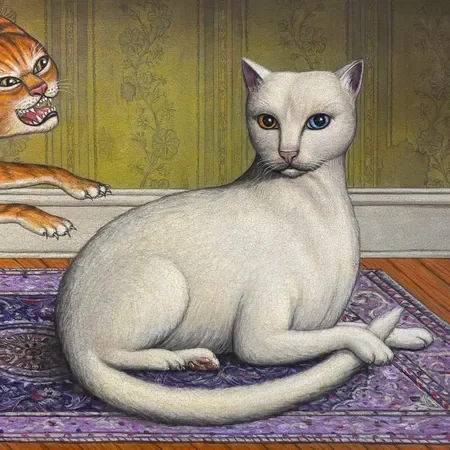
“Nothings About to Happen To Me” Album Cover, Courtesy of Dead Oceans Records.
Brief Context
“Nothing’s About to Happen to Me” is Mitski’s 8th studio album released on 27th February, 2026. It is distributed by her record label “Dead Oceans."
Tracklist:
In a Lake
Where's My Phone?
Cats
If I leave
Dead Women
Instead of Here
I'll Change for You
Rules
That White Cat
Charon’s Obol
Lightning
Holistic Analysis
“Nothing’s About to Happen to Me” is a conceptual, deeply personal exploration of loneliness,
isolation, and the search for peace. At the center of the narrative is a mysterious, withdrawn woman, hiding from the noisy outside world in her home. The album combines themes of melancholy, nostalgia, and reflections on death with Mitski's signature dark humor, where everyday objects like a lost phone or the neighbor's cat become a way to cope with anxiety.
Track 1: “In a Lake”
The album opens quietly - almost a whisper, a country ballad with pedal steel and distant strings. The protagonist sings about a small town where everyone knows everything about everyone: "Here every neighbor knows your name," "And not in the friendly way." In a big city, you can start over, become anonymous, and dissolve. But by the end of the track, the orchestra swells, the brass enters, and the sound literally buries her. "Anonymity" turns out not to be a solution but a new form of loneliness:
“The lights all around you, the dark safe inside." Yes, you can create a new personality, but it means no one’s going to know the real you.
Track 2: “Where’s my phone?”
And here comes the first electric guitar punch. This track is pulled straight from 2014 - the era of
Bury Me at Makeout Creek with a dirty fuzz and panicked vocals: “Where did it go? Where's my phone? Where's my phone? Where did I leave? Where'd I go?” Here, the protagonist loses herself along with her phone, losing her identity. Two and a half minutes of anxiety.
Additionally, this song is the lead single of the album, released on January 16th, 2026.
Track 3: “Cats”
Over acoustic guitar and soft backing vocals, the protagonist sings about getting cats after a
breakup. It’s a cozy, warm, and deeply human song cause she knows she won’t stay alone and “Our two cats making sure I'll be alright”, “Our two cats, both asleep by me tonight."
Track 4: “If I Leave”
This song became the last single from “Nothing’s about to happen to me” released in the same day as the album. It’s one of the most emotional songs on the entire record. It relies heavily on a simple core layout of guitar, bass, and drums, with just a subtle touch of vibraphone added at the end. The lyrics describe an unbalanced relationship where the narrator views herself as fundamentally flawed and difficult to love, making her partner seem entirely irreplaceable:
“But nobody else could forgive me quite as often as you” “But who else could love me | Quite as kindly as you? | Who could love me | Quite as kindly as you?” The song reflects on Mitski’s belief that she is incapable of love by anyone but the song’s addressee, her partner. Her friends and family cannot love her; she shows.
“No one on this street knows
No one in this mall knows
No one in this bar knows
And none of my friends know
Surely, none of my colleagues
Nor do my family”
So, afraid of losing him, Mitski highlights her desperation to have him contained within her life:
“I couldn't lose you
How could I losе you?
I couldn't lose you”
Track 5: “Dead Women”
The darkest song on the album. Over a grand, almost triumphant arrangement (organ, strings, and choir), she sings, "Would you have liked me better if I'd died" “If I'd died willing, you'd have taken it nice." ”But since I'm alive, you'll have to break in as I sleep." "Stab me twenty-seven times."
The song is a satire on the fetishization of female suffering, on the cult of tragic artists who are only loved after death. At the same time, it is a story about control and the desire to control your “loved one” completely. Unlike of “Here,” Jazz lounge piano and vibraphone, almost 60s film music with dark elements where death is personified as a polite acquaintance. It knocks on the door:
“A knock on the door
Saying, "Are you in there, miss?"
Sits near:
“With Death crouchin' beside me”
And not goes so far “just in case”:
Mitski describes death not as a monster that came to take her soul but as a not rough and understanding image, aware of her suffering and ready to wait as long as it takes, humanizing it.
Track 7: “I'll Change for You”
The second single from the album is a bossa nova with flute. Over a light, the protagonist walks on the street near bars that could drown her loneliness for an evening, but unfortunately for her, they are closing:
“Bars, such magic places
You can be with other people
Without having anyone at all, but now
They say they're closing
So I'm loitering outside
Watching all the cars passing by
Like a kid waiting for my ride”
The music is warm, relaxed, and summery. The lyrics are about total willingness to erase herself for someone else's love, just to not be trapped in solidarity. The main character is ready to change beyond recognition just so someone will love her, and it doesn’t seem destructive for her, at least for now.
Track 8: “Rules”
The song is known for its heavy thematic elements of conformity, obedience, and the emotional toll of reshaping yourself to earn approval. In the lyrics, Mitski lists five explicit, narrative "rules" that guide her actions at different stages of the relationship:
Rule 1: "I'll come over / I'll be dressed like your best idea." - Presenting the best version of herself to fit someone else's desire at the dating stage.
Rule 2: "You'll be gentle." - A vulnerable demand for safety in a relationship, at the relationship stage.
Rule 3: "You will ruin me." - Accepting inevitable heartbreak or emotional destruction, the stage of breakup.
Rule 4: "I'm nobody's anyone anymore." - A state of total emotional isolation and loss of identity, right after the breakup stage.
Rule 5: "I'll be alone for a while." - Resigning to loneliness to cope with the aftermath, the stage of rethinking and starting over.
Rule 6: “Then, six, in the morning, I'll be woken up” - a stage of letting go of the old and accepting the new life.
Track 9: “That White Cat”
The centerpiece of the album and its central metaphor. It’s even seen on the cover. A stray white cat takes over her house, and she goes to work to pay for a home that, "by cat logic," was never hers; "Gotta go to work to pay for that cat’s house."
This is one of her best songs when it comes to discussing anxiety and obsession. This white cat is a symbol of the fact that even if she locks herself at home and does not have contact with anyone, she still will not be able to find peace because of the torment in her own head.
Track 10: “Charon’s Obol”
Clocking in at 4 minutes, the track blends deeply cinematic acoustic and soft arrangements with standard indie-rock instrumentation. The title directly references Charon's obol, an ancient Greek burial custom where a coin (an obol) was placed in or on the mouth of a deceased person. This coin served as payment to Charon, the underworld ferryman, to safely transport the soul across the River Styx.
The song uses this mythological imagery to weave a haunting narrative about memory, grief, and spiritual caretaking. The story tells us about a young woman who moves into a "stigmatized" house where several girls had previously died. Every night at midnight, a pack of silent dogs–the pets left behind by the deceased girls gather outside. The protagonist opens her heart to feed them, creating a symbolic bridge between the living and the dead.
Having almost been "one of the girls who died" herself, she chooses to become the "token coin in “the house's” mouth". She sacrifices her own peace to act as a stabilizing ritual, hoping that tending to the property will ultimately heal its tragic history.
Track 11: “Lightning”
The song falls into the alternative/indie genre and concludes the album with an emotional crescendo and a distinct instrumental drop. The lyrics explore acceptance, the processing of dark emotional spaces, and finding beauty within periods of mourning. It leans into a sense of renewal, symbolized by the desire to "come back as the rain."
Conclusion
In conclusion, “Nothing’s about to happen to me” is a deep and soft album with Mitski’s old electric elements sometimes. In this album, she explores themes of loneliness, anxiety, and isolation as a way to find peace through the symbol of a woman who doesn’t leave her home.
It contains that signature depth of lyrics and melody that fans love about Mitski.
The album is streamable on all major streaming platforms.