Paint it Red: The Voice of the Silenced Generation
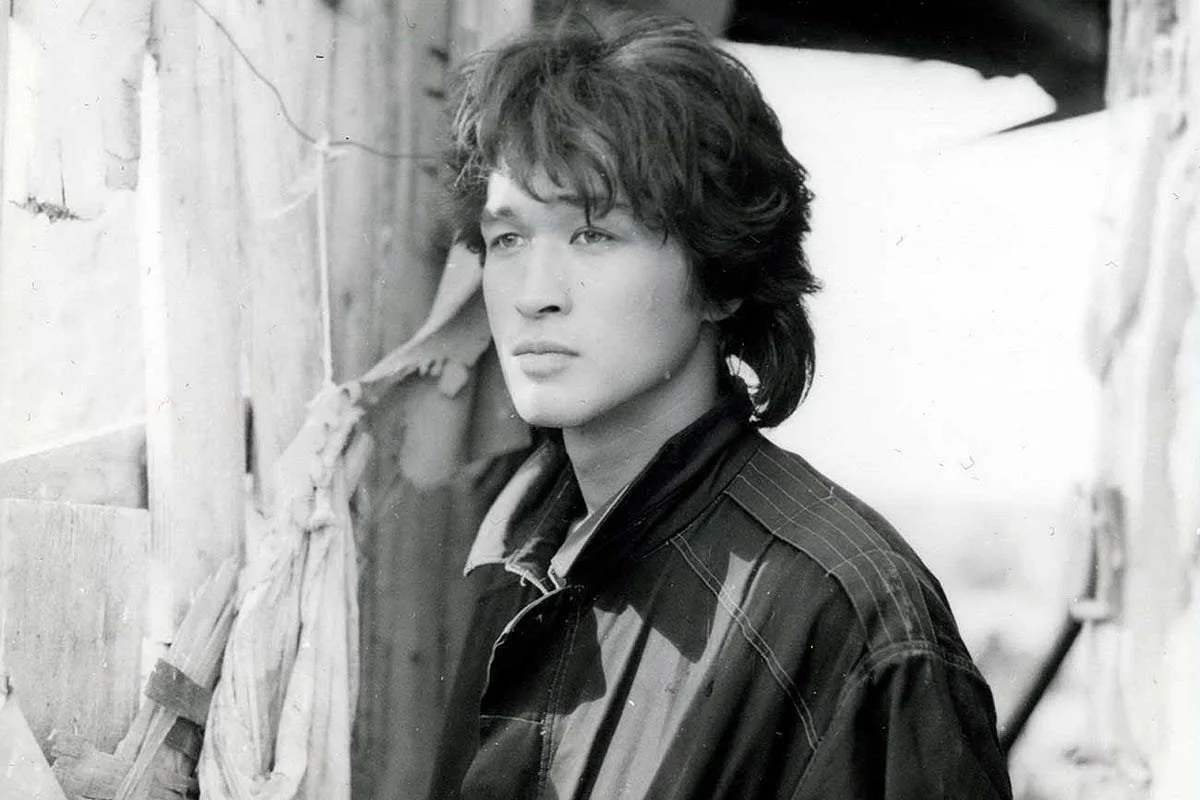
Viktor Tsoi. Screenshot from the movie “Needle.”
Imagine Los Angeles and Miami in the 80s. As a teenager in that era, you could just ride your bike to the nearest record shop and leave with a Mötley Crüe or Guns N Roses album in your hand. While the youth of Big Daddy America enjoyed such liberty, oceans apart, in the cold dry landscape of Soviet Union surrounded by monumental soviet architecture, families stranger to one another residing in housing systems called kommunalka, your rich cousin studying in America visits home for christmas and hands you the led zeppelin record you begged him to bring. You’ll get in trouble for owning it so you record it reel to reel, joining the underground world of what is known as magnitizdat. Technically, when such a regulated environment made a rock revolution almost impossible, a bunch of stubborn soviets did, whose impact survived the fall of the Soviet Union and can be felt in every corner of Modern Day Russia.
To understand the magnitude of Kino’s influence, specifically its frontman Viktor Tsoi, imagine Bob Dylan with his politically charged lyrics, dying at the age of 28 in a way close to James Dean and being remembered as the voice of an entire generation like Kurt Cobain. Unlike Cobain, he wasn’t simply the voice of an entire generation, but the composer of the soundtrack to the empire at its end.
The best source to look at would be Joanna Stingray, close friend of Tsoi and former wife of the lead guitarist Yuri Kasparyan. As she recalled, during her first concert experience where she experienced the magic of Kino, she was also chased and then interrogated by the KGB, which goes on to show what sort of a society they were all growing up in. A fascinating detail about Viktor was his stillness during performances, not dancing like Jagger or smashing guitars like Cobain. Arms by his side, gentle foot tapping, and his mellifluous baritone voice enchanting the crowd.
The military imagery of the Soviet Union wasn’t just for mere symbolism, and young, healthy men were expected to serve their motherland. Tsoi, much to his misfortune, was young and healthy, and so he found a loophole. He scratched his veins, to feign a psychotic episode that would exempt him from military service, but due to his distaste for blood, he scratched only a little, and ended up in the ward for around 6 weeks. Before the myth, he was simply a young rocker not fond of joining the army.
In the summer of 1981, Tsoi and Alexei Rybin formed their first band, Garin i Giperboloidy, but soon lost their drummer to conscription. Regardless, Tsoi wrote the songs for their first album, titled 45, for it lasted 45 minutes, a mark of intricate wordplay, if you ask me. Contrary to the dark atmospheric tone that was characteristic of KINO, 45 was rather whimsical and joyful, partly inspired by The Beatles. He impressed Boris, a well established singer, who opened doors for him and then entered Yuri Kasparyan.
While rockstars in the USA and UK burnt cash on coke, ferraris and model trains, Tsoi shoveled coal. It grounded him, he said. His inability to grasp the level of fame he had reached added another dimension to his image. Joanna once recalled an incident where she accompanied Tsoi to buy bread, and while standing in line like everyone else, Tsoi got bombarded with fans, begging for his autographs. What did he do? He ran. He ran with her giggling.
For a man this humble and talented, a long life filled with reunion tours, post retirement interviews and autobiographies would have been well deserved. Life doesn’t work that way. In a head-on collision at the Sloka-Talsi highway, his life came to an abrupt end. He was buried on August 19, 1990. But the mythology had already begun. A fan, in a state of devastation, scribbled ‘Today Viktor Tsoi died’, to which another one scrawled a reply ‘Tsoi is Alive’ which became a cultural epitaph and can be seen scribbled on walls all across Russia.