Daisy Chain Fields: Olivia Rodrigo Brings Lilith Fair Into 2026
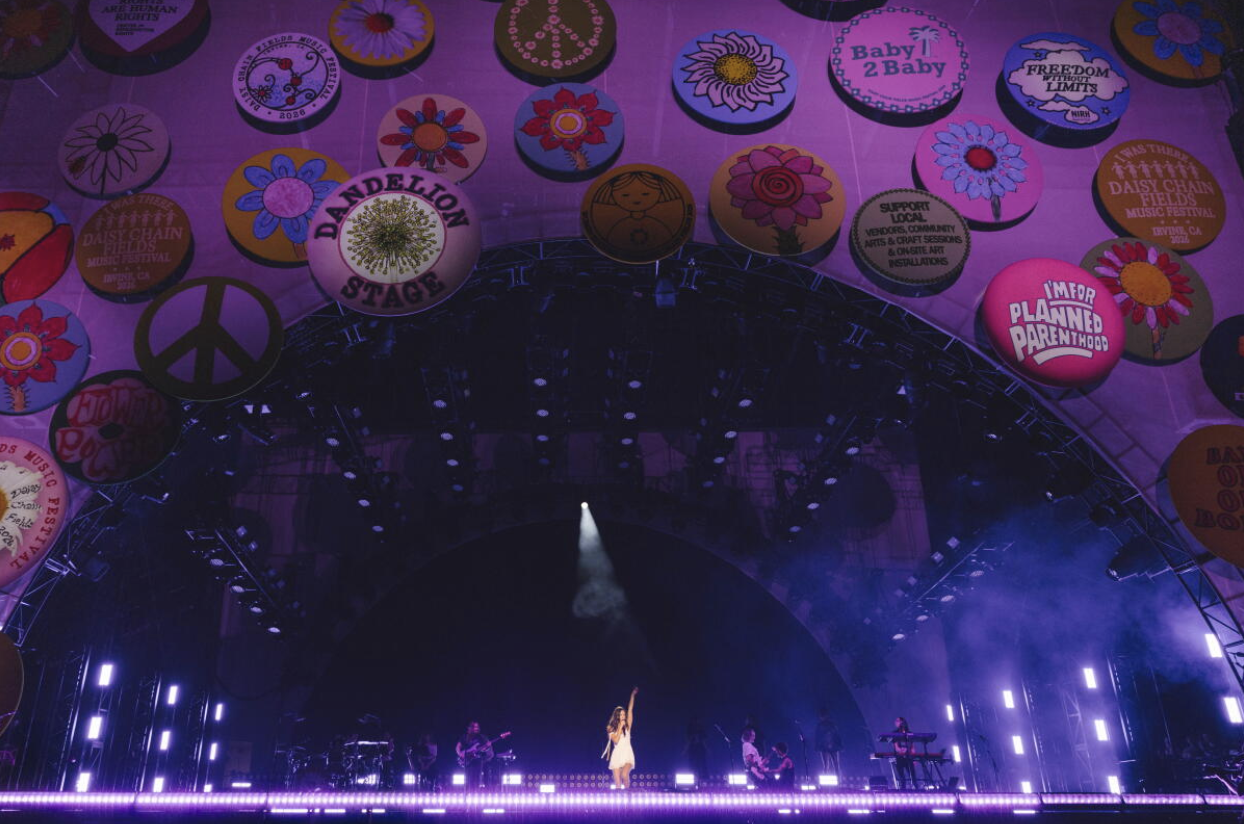
Olivia Rodrigo’s set on the Dandelion Stage at the inaugural Daisy Chain Fields Festival, on August 29, 2026. (Emma Wannie)
On August 29, Olivia Rodrigo brought together 45,000 people in Irvine, California, for the first ever Daisy Chain Fields. The one-day festival featured an entirely women-led lineup, ranging from rising acts like Doechii and Chappell Roan to established artists like Garbage, Bikini Kill, and the Breeders. By the end of the night, Rodrigo had shared the stage with some of the idols who came before her, including Alanis Morissette, Sarah McLachlan, and Stevie Nicks.
Described by Rodrigo as “riot grrrl meets flower child,” the festival was created as a nonprofit event supporting organizations focused on women and girls. All of the performers volunteered their time, and the festival ultimately raised $20 million for these organizations, with Melinda French Gates matching the initial $10 million raised.
The idea behind Daisy Chain Fields is not entirely new, however. Almost 30 years earlier, another women-focused festival was doing something similar, during a time when radio stations would play two female artists back-to-back.
In the 1990s, Canadian singer-songwriter Sarah McLachlan grew frustrated with the music industry’s reluctance to put multiple women on the same concert lineup. In 1996, she and Paula Cole began performing together, challenging the idea that audiences would not support multiple female artists in the same show. That experiment eventually led to Lilith Fair.
Beginning in 1997, Lilith Fair toured across North America with an all-women lineup that included artists such as McLachlan herself, Sheryl Crow, Tracy Chapman, and Erykah Badu. It attracted millions of people and raised millions of dollars for charity, becoming one of the most successful touring festivals of the decade. It presented women artists as a community capable of captivating audiences without needing to compete with each other for a limited set slot.
“Lilith Fair was a huge inspiration in me starting this festival,” Rodrigo told ABC News earlier this year. “And actually, the first person that I called when I decided that I wanted to do this festival was Sarah McLachlan” (Good Morning America).
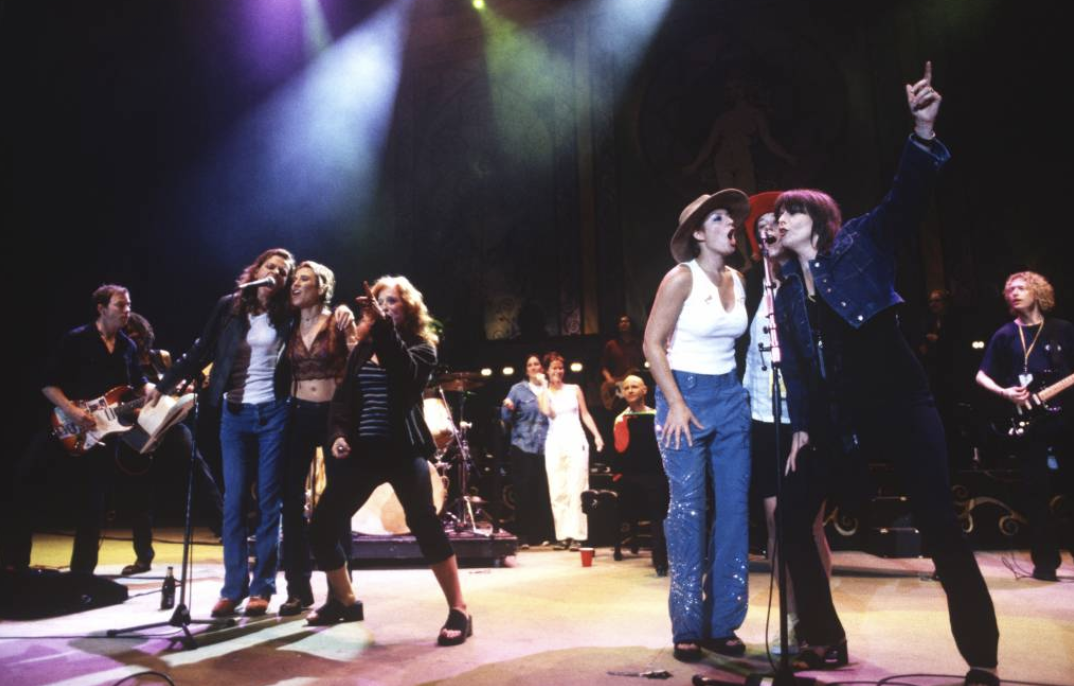
From left, Sandra Bernhard, Sheryl Crow, Bonnie Raitt, Chrissie Hynde, Sarah McLachlan, and Beth Orton performing in Mountain View, California, during Lilith Fair. July 14, 1999. (Getty Images)
Rodrigo, who grew up with many of these artists as influences, performed alongside the likes of Mitski and Rachel Chinouriri, artists who represent the current generation of indie pop and rock. The festival notably refused to stick to just one sound, with Doechii’s rap set alongside Not For Radio’s dream pop balladry. Rodrigo’s own closing set, which included the live debut of her political charity single “serena joy,” was backed by an all-women band that reworked songs from across her catalog with a more post-punk edge. It made the point that "women's music” isn’t just one genre, but rather spans multiple.
At the same time, the festival included musicians who helped trailblaze female alternative and rock genres decades ago. Bikini Kill and Garbage performed inspiring acts for all ages in the audience. Olivia herself shared that seeing young fans scream Bikini Kill’s classic punk anthem “Rebel Girl,” and watching them connect across generations, was a highlight of the festival.
The intergenerational connections kept coming. Rodrigo performed “Ironic” with Alanis Morissette and “Building a Mystery” and “Angel” with McLachlan. The latter performance was a dedicated tribute to Dolly Parton, who had passed away just days before the festival. During Rodrigo’s closing set, Nicks joined her for a performance of Fleetwood Mac’s “Landslide.” Afterwards, Nicks told the crowd, “She reminds me of me, when I was her age a hundred years ago.”
Beyond generational bonds, the festival’s charitable mission also shows how the relationship between music and women’s rights has changed. Daisy Chain Fields, while existing in a separate cultural era as Lilith Fair, carries a similar belief that music can create community around women’s issues.
The festival partnered with organizations working on issues affecting women, including reproductive healthcare and education. These organizations (Planned Parenthood, Johns Hopkins Center for Indigenous Health, National Women’s Law Center…) received over $2 million each, showing that the event’s impact goes past the performances themselves. The festival also featured opportunities for attendees to engage with those organizations directly and vote for leaders who support those values, making activism part of the communal festival experience.
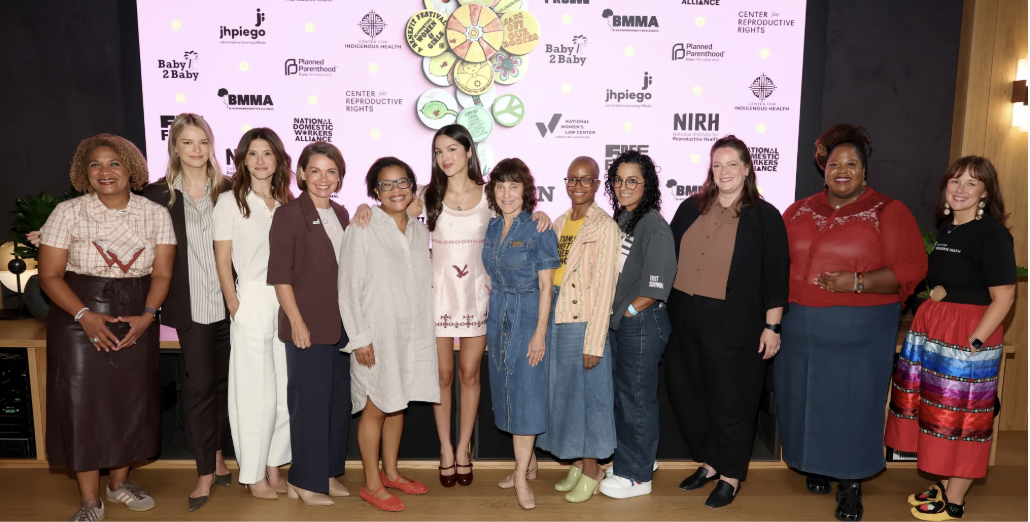
Leaders and CEO’s of the nonprofit organizations partnering with the Daisy Chain Fields Fund, at the Daisy Chain Fields Press Conference. (From left, Fatima Goss Graves, Kelly Sawyer Patricof, Norah Weinstein, Dr. Allyson Bear, Christian LoBue, Olivia Rodrigo, Caren Spruch, Jenn Stowe, Sonya Passi, Madeline Halperin-Robinson, Angela D. Aina and Dr. Melissa Walls). Getty Images
This idea is embedded in the festival’s name. “The metaphor,” she explained in a Rolling Stone interview, is that “we’re all so much stronger when we come together, these individual pieces coming together and forming something that’s unbreakable.” She added that people who want to “keep us down” can rely on people feeling “overwhelmed and alone,” making a strong community a form of power, despite not seeming to have any when broken up into individuals.
Daisy Chain Fields was just as deliberate about its visual world as its musical one. Flowers and handmade looking imagery dressed the festival grounds, while buttons and art installations, such as Yoko Ono’s “Wish Tree,” where festival goers covered a tree with handwritten wishes and notes, or Astria Suparak’s “Grrrl Germs: Punk feminism goes viral, 1991–2026” which showcased an exhibition celebrating the Riot Grrrl legacy turned messages about reproductive rights and equality into part of the scenery.
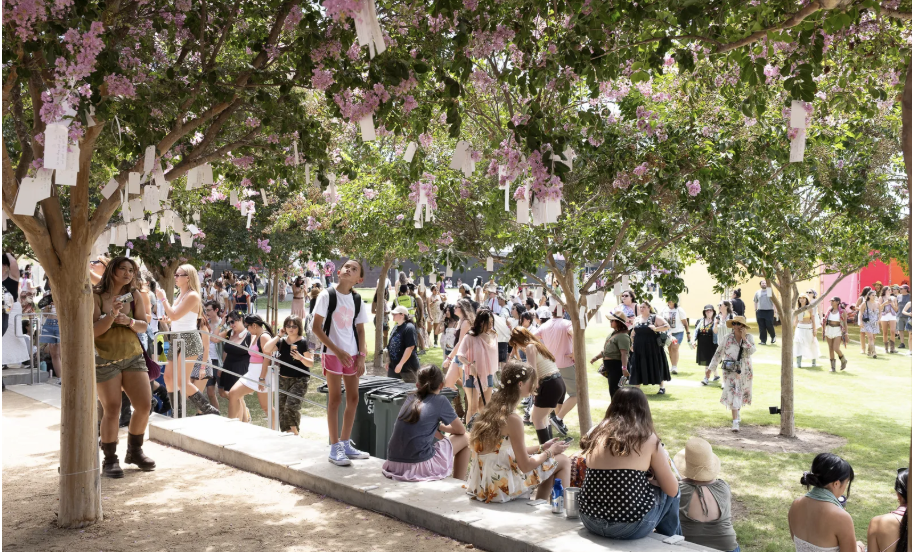
Yoko Ono’s ‘Wish Tree,’ an art installation at Daisy Chain Fields. (Emily Malan)
Ultimately, these details made the festival feel like a world focused on using music and community as a driving force for change. The flowers, handwritten wishes, political artwork, and sets all held the same ideas that the Daisy Chain Fields fund advocates for; creativity, individuality, and collective power.
In that sense, Daisy Chain Fields did more than just recreate Lilith Fair for a Gen-Z audience. She made something built by her own generation’s desires, while leaving space to recognize the artists who fought for change before her. The result was a festival where a teenager could discover Bikini Kill and sing along with her mom, where Rodrigo could sing alongside her own idols, and where music could take part in a broader movement for women’s rights.
Although we are all glad Daisy Chain Fields will come back in 2027, its first year already demonstrated the power of its namesake. As Rodrigo explains, a single flower may stand alone, but a chain is made by connecting one to another. As shown by multiple events such as Daisy Chain that advocate for action, this connection is held together by music.